
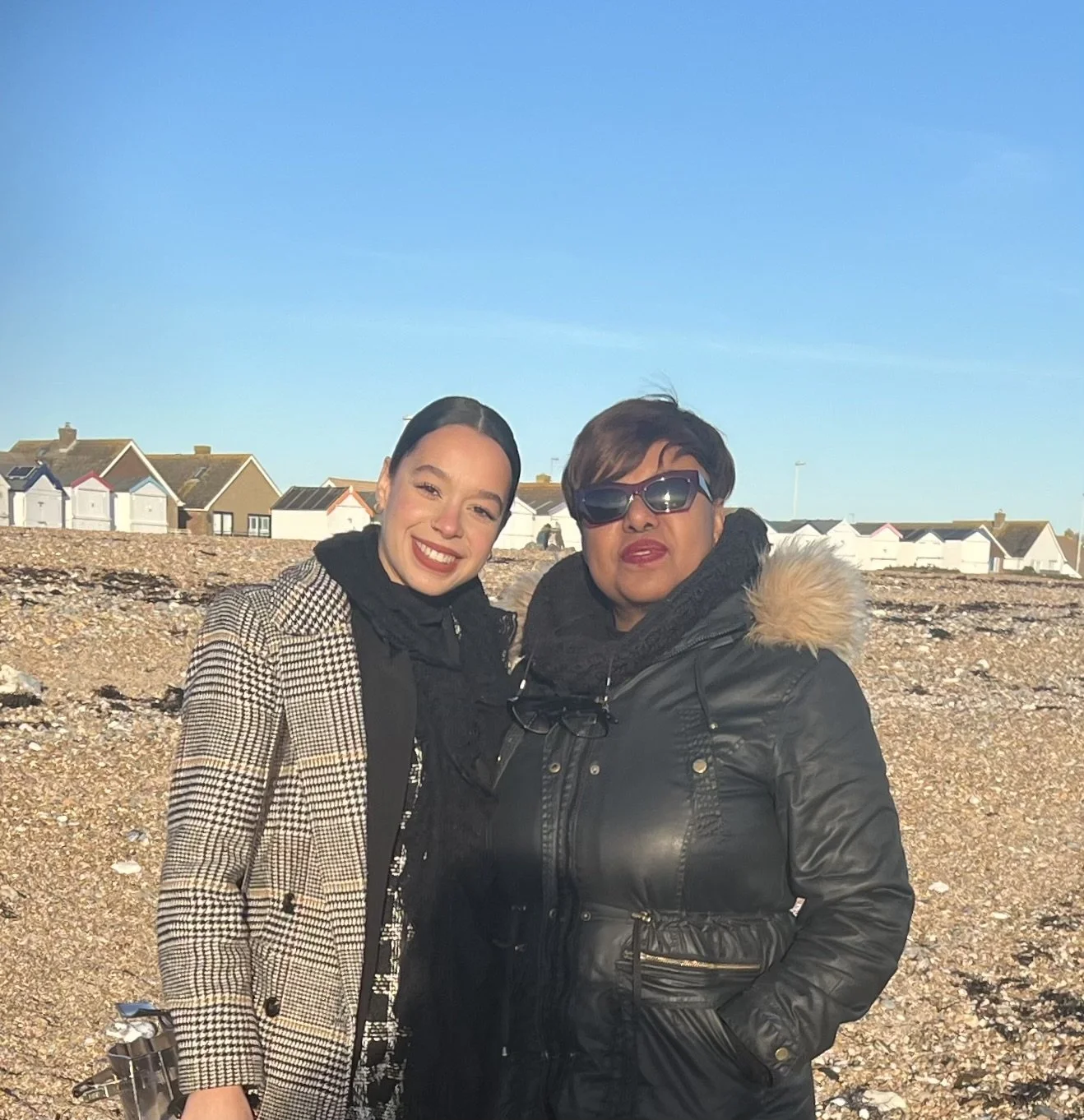
Jessica with her Mother Ivone
From hopelessness and isolation to healing and hope, Jess reflects on the recovery journey that transformed her life and rebuilt her relationship with her mum.
Content note: This story includes discussion of addiction, mental health challenges, self-harm, and suicidal thoughts.
This Recovery Month, we're sharing stories that highlight the life-changing impact of recovery and the hope it can bring to individuals and families affected by addiction.
In this blog, Jess reflects on her journey through alcohol addiction, mental health struggles, and recovery, while her mum, Ivone, shares the impact addiction had on their family and the joy of seeing her daughter rebuild her life. Together, their experiences offer an honest and powerful insight into the challenges of addiction, the importance of support, and the reality that recovery is possible.
You can also watch their full video interview below, recorded at our Recovery Festival.
Can you tell us a little about your life before recovery?
Before recovery, my life could be summed up in 3 words. Dark, isolated and chaotic. My entire world had shrunk to the size of my childhood bedroom at my mum’s house which I rarely left during the last year of my drinking. Except to go and get alcohol. Once I started drinking, I wouldn’t stop until I physically passed out. I was trapped in a cycle of arguments with my mum, attempts to harm myself and hospitalisations. More than anything, I was completely hopeless.
When did you realise alcohol had become something you needed help with?
In 2019, I was sectioned and admitted to a psychiatric hospital. Even in hospital with mental health professionals around me and people trying to help, my need for alcohol was greater than anything else. As soon as I was given day release, I started smuggling alcohol back into the hospital. Looking back, I think that was when I could no longer pretend or deny that my drinking was something I was not in control of anymore.
How did alcohol affect your mental health?
Alcohol had such a damaging effect on my mental health. I stopped looking after myself. Even basics things like brushing my teeth or showering I couldn't manage. I lost all desire to live and I became suicidal. I also experienced psychosis. The more I drank, the more of my sanity I lost. I started drinking to escape the way I felt, but instead I gave those feelings a louder voice.
How did addiction affect your relationship with your mum and family?
My relationship with my mum was deeply affected. She raised me on her own and we were incredibly close. Addiction completely changed that. There was no peace. There were constant arguments and my mum gradually became more of a carer than my mum. The strain on our relationship and my addiction was felt by the whole family. Not only was I suffering, but I watched everyone around me, most of all my mum suffer too.
What made you decide to seek help and come to Kenward Trust?
I had reached a very low point in my life and was struggling with thoughts of ending my life. Around this time, I was introduced to an alcohol liaison nurse who told me about Kenward Trust. So I looked it up. I saw pictures of the grounds which were a world away from the messy bedroom I had spent most of my days living in. I watched videos of the other addicts who had come to Kenward and recovered.
Their testimonies were everything to me because they gave me hope. Hope that if others could overcome addiction, I could too.
Was there a moment when you started to believe recovery was possible?
There wasn’t one particular moment or anything dramatic where I suddenly believed recovery was possible. For me, it happened in the small everyday things. Going to the supermarket and doing my own food shop. Managing a journey to visit my mum and family by myself. Getting into a routine, cooking for myself, keeping my room tidy and making meaningful connections with the staff and other residents at Kenward. All the things that seem completely ordinary to someone else were huge achievements for me. There was a time when even brushing my teeth I couldn’t manage. Being slowly able to do small things for myself showed me that not only was recovery possible, but life was worth living too.
How is your life different today compared to two years ago?
Words don’t really do justice to how different my life is today compared to 2 years ago. Or how grateful I am. Today, I don’t try to escape from life, I’ve learnt to live it. I have a job, I chair AA meetings and sponsor other alcoholic women. I completed 8 months of intense therapy where I was able to process some of my past trauma. I’m learning to drive. Something I never thought I’d do. I even climbed Snowdon with some of the other Kenward residents...twice! Life isn’t perfect. I still have difficult days. Recovery hasn’t removed the mountains from my life, it’s just taught me how to climb them.
Recovery Month is about celebrating hope and recovery. What message would you share with someone who is struggling right now?
Addiction doesn’t have to be a death sentence. There is a way out which many addicts have found, so why not you too? Despite how hopeless you might feel, how messy your life has become or how impossible recovery might seem, no one is too far gone to recover. If there is a tiny part of you that wants something different, hold on to that. For me, that tiny bit of hope was enough to try one more time. And it changed my life.
Recovery Is Possible
Jess and Ivone’s story is a powerful reminder that recovery doesn't just change one life, it can transform an entire family.
This Recovery Month, we celebrate everyone taking steps towards recovery and the loved ones who support them along the way.
If you or someone you love is struggling with addiction, help is available. Contact us on 01622 522 724 or email reception@kenwardtrust.org.uk
Recovery is possible. Never give up